Tuesday, May 2, 2023

"YOU NEED TO GET A DOG," THEY SAID


Against my instincts, I was talked into taking a dog a few years ago for the first time in my life. His name was "Bear." It lasted six days and I gave him back to his owner! "Bear" craved more love that I could give it. He needed a whole family, taking turns, to meet his constant need for affection. 

Even though "Bear" seemed to somehow know how to keep me company, tell time and read books, I couldn't take it after six days! "Bear" would follow me from room to room, sit in the middle of the room and just stare at me until I moved to another room! No matter when I set the morning alarm, about five minutes before it would go off, "Bear" would enter the bedroom and put his nose close to my ear and pant until I woke up! One day I came home and he had pulled a book off my bookcase and chewed it up! It was a book about "loneliness!" 

It would have been impossible to keep him, especially when I started travelling a lot with my work doing priest retreats and convocations. Not only could I not have a pet, I could also not have living plants without bothering others to water them while I was gone. As far as I know, I don't have anything in my condo that needs to go to the doctor, needs to be fed or watered or needs to be picked up after, except me!  Presently, I own a few plastic plants and two stuffed animals (sheep) that people gave me. So far, I love the freedom they bring! 

Not just dogs and live plants, but even plastic plants can be problematic for me. I had an artificial plastic cactus at one time, but I had to throw it out! An old German lady (Wilhelmine), that I used to rent an apartment from, would clean my house every few weeks. She thought the cactus was real and watered it regularly without my knowing it until the planter that the plastic cactus was placed in began to give off an awful rotten smell. I could not find the source of the smell for quite a while! Cacti need little water and plastic cacti need none! She had to learn the hard way! 


Sunday, April 30, 2023

FAKES, PHONIES AND FRAUDS NEED NOT APPLY


The shepherd of the sheep walks ahead of them, and the sheep follow him, because they recognize his voice. They will not follow a stranger; they will run away from him because they do not recognize
the voice of strangers.
John 10:1-10

As Jesus reminds us in the gospel reading today, the People of God have always been plagued by religious phonies, fakes and frauds who wear the uniforms of a shepherd, but underneath are “wolves,” “thieves and robbers,” preying on the sheep for their own personal benefit. When they are busted, we read about them in the news every once in a while. People run from them!

Maybe an even more serious problem facing Catholicism today is the quality of its spiritual leadership in the face of deteriorating communal values and religious practice. Maybe the bigger problem than fakery is the incompetence of our spiritual leaders. We may mean well and be holy ourselves, but meaning well and being personally holy is not enough these days. We have to not only be good ourselves, but we have to be good at it what we do! I used to tell our future priests at St. Meinrad when I was working over there, “It is no longer good enough for us priests to simply be priests as nouns! We have to be able to be priests as verbs. Being a priest is one thing, but priesting is another! By that I mean, we can never be satisfied with simply being designated spiritual leaders, we must strive, with God's grace, to become real spiritual leaders. For instance, I used to tell the seminarians who loved to wear cassocks that wearing a cassock is OK as long as they had something to go in it! I told them that it’s not good enough to merely dress like a spiritual leader. They had to actually become competent spiritual leaders! 

The personal piety of religious leaders is not good enough either. I don’t know about you, but pietistic, arrogant, religious know-it-alls get on my nerves big time! They make me angry most of all because they attempt to horde God's love and measure it out to people in little thimbles, as if God's love was in short supply. Resembling the twisted God they believe in, they tend to project onto the real God their own self-loathing. One of the things that saddens me most is that I know that some young people think they have to become bible-thumping, body-hating religious fanatics in order to be serious disciples of Jesus Christ. Since many young people can't wrap their minds around that tired off-putting approach to religion, many of them throw the baby out with the bathwater, yawning at what they hear as they dismiss religion altogether. 


The shepherd of the sheep walks ahead of them, and the sheep follow him, because they recognize his voice. They will not follow a stranger; they will run away from him because they do not recognize the voice of strangers.

I define "spiritual leadership" as the ability to influence people – to influence people through invitation, persuasion, example and the skillful use of the Church's rites and rituals - to move from where they are to where God wants them to be.

We surely know today that organized religion has lost its power to impose unquestioned rules on the behavior of its members. This turn of events frustrates a few priests, leaving them with a propensity to blame the laity for their lack of faith and the culture for its "secularism" and its "moral relativity" in increasingly shrill denouncements. I am convinced that the “lack of faith” “secularism” and “moral relativism” that they condemn is really the result of years of incompetent spiritual leadership! Those spiritual leaders who have failed to influence people, not only tend to blame the laity, they are now turning to the government to make laws to force people to be good because they themselves were not able to inspire them to be good!

No amount of ranting and raving, however, about how we ought to be listened to is going to fix this. The fact of the matter is, that in a society where "a consumer" is a primary self-definition, we religious leaders have to not only know what the truth is and believe the truth ourselves, we also have to be able to sell that truth to others. We have to be able to convince people to see it, accept it and live it. We need to be more than "right." We need to be "convincing" as well.

The more we priests fail in their ability to influence people, the more we tend to blame, criticize and condemn. Silly and counter- productive rants about "secularism" and "moral relativism" merely expose our lack of spiritual leadership abilities. The truth is there is an amazing lack of dynamism in the Church's designated leaders and in its pastoral structures for evangelization in a changing cultural climate - and that culture seems to be telling us that it is time for us to "shut up or put up."

What is needed are priests who are capable of telling people about the love of God in language that no longer sounds hackneyed and archaic, but in convincing language that resonates with authority and conviction. It is not good enough for shepherds, our religious leaders, to believe that "grass is good" and "water is necessary," they have to be able find it and to lead people to it - sometimes in a barren spiritual landscape. In short, our people need for their spiritual leaders to be what John Paul II called "incarnations of the Good Shepherd's love."

The shepherd of the sheep walks ahead of them, and the sheep follow him, because they recognize his voice. They will not follow a stranger; they will run away from him because they do not recognize the voice of strangers.


Saturday, April 29, 2023

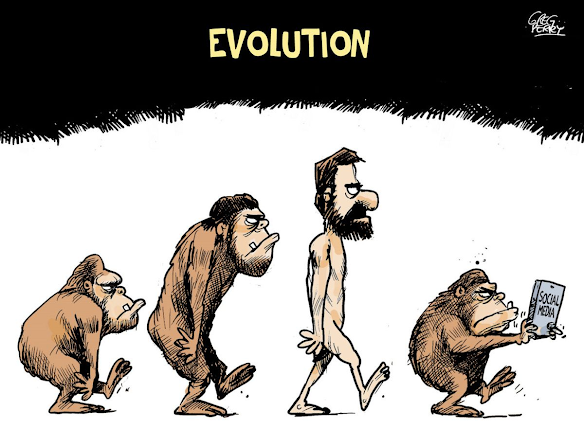
A SAD AND TERRIFYING TREND


Want your teen to feel happier and less anxious? Get them off their phone and social media.

Phil McGraw and Dr. John Whyte

Mon, April 24, 2023 


The mental health crisis among our children has reached epidemic proportions, especially among teenagers. They're dying more frequently and feeling more depressed, anxious, lonely and hopeless than ever before.

Although prolonged isolation during the COVID-19 pandemic definitely made the problem worse, it predates the past three years.

A new review in the Journal of the American Medical Association found marked increases in pediatric mortality in 2020 and 2021, rising 11% and 8% in those years, mostly among teenagers and largely among males.

It wasn't COVID-19 infections driving the increase in mortality. Instead, it was suicide, homicide and drug-related deaths. These were "deaths of despair," where children feel so hopeless that they turn to drugs or suicide.

Notice we don't say "drug overdoses." That term doesn't begin to describe our problem accurately. Too many children are using social media platforms to buy counterfeit pills, a high percentage of which are laced with lethal doses of fentanyl. That's not an accidental overdose. That's poisoning.

CDC finds teen girls are more likely to feel sad and hopeless

Despair can turn debilitating well before it becomes deadly. A recent Centers for Disease Control and Prevention survey revealed a marked increase in the share of teenage girls who felt sad or hopeless, surging from 36% in 2011 to 57% in 2021. For boys, the share was 21% in 2011 and 29% in 2021.

Nearly a third of teenage girls have "seriously considered attempting suicide," an increase of nearly 60% since 2011.

Adults can and must help. Parents, guardians, teachers, coaches and anyone else with access must recognize the symptoms and guide those suffering to the right kind of evidenced-based help. These children need acknowledgement, support and the tools to cope with a tough, sometimes isolating and intimidating world.

An important note: We shouldn't try to shield them from the problems of the world, because those problems aren't going away. Nor will false reassurance do them any good. We need to strengthen their character so they have realistic confidence in their ability to cope with personal and societal challenges.

The bottom line is those of us in charge of preparing them for "the next level" of life have failed to do our jobs. Maybe it was too easy for us to allow them to be "electronically babysat" by the devices we bought them to notice they were not becoming socialized, developing self-esteem and finding their passion. That's on us.

Several leading researchers have posited reasons why teens are so sad now. New York University professor Jonathan Haidt blames the rise of social media and the amount of time teens spend on their phones instead of with friends. Haidt has said that "childhood has been rewired" by phone-based social media.

When teenagers, especially teen girls, compare themselves with their peers and famous influencers for hours on end – instead of hanging out with friends and family face-to-face – it's no wonder they become anxious or depressed.

Experts say there's link between smartphone use and rise in depression

Some experts have suggested a direct line between the advent of smartphones and social media and increases in teenage depression and anxiety. The JAMA review points out that suicide rates among those ages 10 to 19 began to increase in 2007, the same year Apple introduced the iPhone.

And Haidt shows that anxiety began to skyrocket among teens the same year Facebook bought Instagram and increased its user base.

Derek Thompson, a writer for The Atlantic, has helpfully collated other expert hypotheses for the teen mental health crisis. He also notes that sociality among teens is down.

Psychologists Jean Twenge and Laurence Steinberg of Temple University told Thompson that social media has replaced other important activities. Teens today get less sleep, play fewer sports and spend less time with friends than teens in the 2000s.

They're also getting fewer summer jobs. The Census Bureau reported last year that third-quarter (summer) employment levels for 14- to 18-year-olds were at their lowest levels in 28 years. As a result, teens are missing out on valuable character-building experiences.

Teenagers are also bombarded with more bad news through many more channels of access than teenagers in previous generations. They now exhibit high rates of anxiety related to policy issues like immigration, climate change and gun violence.

It's clear from the literature that activities devoid of phones and the internet improve happiness. Twenge cites a study of eighth and 10th graders from 2013 to 2016. While texting, social media and surfing the web correlate with lower self-reported happiness, sports or exercise, volunteer work, movies, religious services and concerts correlate with higher self-reported happiness.

Clearly, we are in a teen mental health crisis, with social media and modern technology largely to blame. Unfortunately, going cold turkey on social media and cellphones society wide isn't a practical way to address this collective-action problem.

Teachers and schools have a role to play. In class, they can promote group activities that require discussion without any technology. Outside of class, they might encourage their charges to join a sports team, school play or a hobby club.

As adults, we should notice when our teens spend too much time on their phones and encourage them to go out and see a friend. But it must be on a collective level. Parents and teachers should get together and say enough is enough.

Communities from schools to neighborhood blocks to churches must unite and together model the value of social connection. It's not too late, but we have no time to lose.


Friday, April 28, 2023

THOUGHTS ON TURNING SEVENTY-NINE TODAY


 THE FICTION


THE FACTS


THE TRUTH


Let me "raise a toast of gratitude!" I have lived longer than both of my parents and and my youngest sister. In just two years, if things keep going well, I will have lived longer than three of my four grandparents! In five years I will have outlived the last of them!