Saturday, May 23, 2020

"GROUND HOG DAY" REVISITED


Some of us will remember the "fallout shelters" of the 1950s and 1960s, places where we could go to be "protected" from "nuclear fallout" in case we were bombed by the Communists. 

What were we thinking? After a couple of months quarantined in my condo, I couldn't imagine living underground for months or even years. I did live in the basement apartment with no windows under Saint Peter Church in Monticello from 1975 - 1980, but I did get out a couple of times a day.

I think if I had to live back then in a "fall out shelter" for years, at some point I would have run into the streets praying that the bomb coming toward me would actually hit me right between the eyes! I have never done well in confinement for very long! 

That's probably behind the present thinking of some who are pushing a  "let's open everything up, even if it kills us" policy! I can understand the temptation, but I think it is extremely foolish to defy the advice of medical experts this early in the pandemic.  This "war" will be won with patience and thought, not rashness and stupidity. 


In the 1950s and early 1960s, the buzz word in American homes was "fallout shelter."

A fallout shelter was a civil defense initiative intended to reduce casualties in a nuclear war. It was designed to allow occupants to avoid exposure to harmful radioactive fallout from a nuclear blast and its likely aftermath of radiation until radioactivity dropped to a safer level.

The fallout shelter craze came with the cold war involving the United States and Russia. Events during the cold war heightened the awareness of fallout shelters and peaked in the late 1950s and early 1960s.

President Dwight D. Eisenhower expressed little interest in shelters until 1957, when a Gaither Report was released. The report assessed the relative nuclear capability and civil defense efforts of the United States and the Soviet Union.

The report concluded that the United States would soon be surpassed in all categories of nuclear weaponry and that civil defense preparations in the USSR were well ahead of American efforts.

Public response to the report was an upsurge in fallout shelters. By the late 1950s, officials were actively promoting the construction of fallout shelters as part of the civil defense program. Plans were drawn up. From 1958 onward, the Office of Civil Defense not only promoted home shelters but also published a collection of manuals and created videos that showed Americans why, and how, to build home shelters.

The Russians ended a three-year moratorium on nuclear testing with a blast over central Russia in 1961 and warned the West that "It would take really very few multimegaton nuclear bombs to wipe out your small and densely populated countries and kill you instantly in your lairs."

President John F. Kennedy recommended a course of action to his fellow Americans:

"A fallout shelter for everybody," he said, "as rapidly as possible." Calling the building of the Berlin Wall in 1961 "the great testing place of Western courage and will," Kennedy promised to let every citizen know what steps he could take without delay to protect his family in case of attack.

A year later, the Cuban Missile Crisis would shove the world to the brink of a nuclear war for 13 agonizing days.

The Soviets had installed nuclear missiles in Cuba, just 90 miles off the coast of the United States. Soviet field commanders in Cuba were authorized to use tactical nuclear weapons if invaded by the United States.

Fortunately, the nuclear bombs were never dropped.

People continued to build fallout shelters until the mid-1960s when nuclear weapon testing bans and nuclear disarmament campaigns became prevalent -- the strategy of building fallout shelters waned.

Americans began to accept that fallout shelters probably did little to protect them from a nuclear disaster. The bomb shelters became wine cellars, storage spaces or just plain storm shelters.

The federal government recommended that fallout shelters be placed in a basement or buried in the back yard. The idea was to get as much mass as possible between survivors, the detonation, and its after-effects.

A fallout shelter built in the corner of a basement was the least expensive type, and it supposedly offered substantial protection. In many plans, concrete blocks provided the walls. An open doorway and vents near the floor provided ventilation. The shelter's entrance was constructed with a sharp turn to reduce radiation intensity. According to civil defense authorities, a concrete block basement shelter could be built as a do-it-yourself project for $150 to $200 at the time. As part of a project for a contractor, the cost could have gone to $1,000 or more.

Exactly how much protection it actually afforded was an open question.

Ventilation in most shelters was provided by a hand-cranked blower attached by a pipe to a filter mechanism on the surface. By turning the crank, the shelter would be ventilated with fresh air filtered to keep out radioactive particles. More elaborate plans involved installation of an electrical generator to provide all the comforts of home.

"Our shelter had an air-exchange unit, but I disconnected it," Snyder said. He has never been a fan of fallout shelters. "I think the bomb shelter idea was a farce," Snyder said. "We don't use it as bomb shelter - it's not stocked with any provisions." In fact, the space is used mostly for the storage of Christmas decorations.

"We use it for storage, and it can be used as a storm shelter," Snyder said. "I've told my neighbors they are welcome to come over if they see a tornado coming across the river."

When shelters were being constructed, it was recommended that inhabitants remain in the space for at least two weeks following a nuclear blast. They could then leave the shelter for a few hours a day to begin with. It was suggested that people sleep in the shelter for at least three months.

Some of the fancier shelters in the day had many items to make things more comfortable. They included a battery-powered radio, lanterns, sleeping bags and cots, Geiger counter, chemical toilet and waste holding tanks/waste disposal bags, heating system and fuel tank, air circulation system or air filtering systems, or bottled air, electrical generator, firearms (to discourage intruders) and communications hardware. Recommended supplies included a variety of canned goods, bottled drinking water or water storage drums, first-aid kits, reading material, recreational materials, cleaning supplies, extra clothing and writing materials.

There were also public areas designated, and built, as fallout shelters and were marked with a telltale yellow and black sign. In 1961 President Kennedy asked the Congress for $100 million to build public shelters. Those areas eventually were converted to other uses.


Thursday, May 21, 2020

BEING MORE INTENTIONAL ABOUT VERY ORDINARY THINGS - THREE

This is the third in a series of periodic reflections on the "ordinary things" that many people do on a regular basis without much thought. During this pandemic, I am developing a need to "rage, rage" against hast and laziness and replace it with care and attention. My hope is to become personally more intentional about doing ordinary things with care and focused attention, while inspiring others to maybe do the same.  

#3
"Stepping Out of Your Comfort Zone"


I have learned from experience, ever since I left home at age fourteen of my own free will for minor seminary, that the secret to a full and rich life is to regularly take the risk of stepping out of your comfort zone.  I learned that, when you do, your world expands and you get a new perspective on your old world in the process. For some people, doing that is just way too scary. As Thomas Merton said, The biggest biggest temptation in life is to settle for too little."   

The opposite of "stepping out of your comfort zone," insuring that you have a very narrow life, is summed up in the words of an elderly woman from Appalachia when she was asked why she had never traveled more than two miles from where she was born and grew up. When asked about it, she answered, "I just don't believe in goin' places!"  

All my adult life, I have been very intentional about "stepping out of my comfort zone." As the Dr. Suess child's book says, "Oh, the Places You Will Go!" I have tracked my decisions to step out of my comfort zone and listed some of the rewards that have come to me for doing just that in my autobiographical book, Between Courage and Cowardice: Choosing to Do Hard Things for Your Own Good. I have tried to follow the advice of Thoreau who said, "Be the...Lewis and Clark of your own streams and oceans, explore your own higher latitudes...be a Columbus to whole new worlds within you, opening new channels, not of trade, but of thought...it is easier to sail many thousand miles through cold and storm and cannibals...than it is to explore the private sea; the Atlantic and Pacific Ocean of one's being alone..." 

As I said earlier, I have learned that, when you do step out of your comfort zone, your world expands and you get a new perspective on your old world at the same time. Nothing in my life has shown me that truth like my most recent "stepping out of my comfort zone," volunteering in the Caribbean missions of the poor little country of Saint Vincent and the Grenadines.  I am often asked, "Why would a person like you, who could afford nice Caribbean cruises, stay in fine hotels and eat from luscious buffets in your retirement, choose to volunteer your time,  give your money and place your self in poverty, heat and potholes? 

The secret of stepping out of one's comfort zone is to realize that something new, something very good will ultimately come to you in the process. The worst approach to volunteering in the missions is to go there with a belief that you are the only one who has anything valuable to give and they are the only ones who have anything to learn. Often, its the opposite! 

Every trip down there, twelve of them so far, has been a learning experience for me. I went into it for this reason primarily - so that their situation would change me, not for me to change their situation. Seeing the contrasts regularly and so vividly, I have learned how stingy people who have everything can be, while how generous people who have nothing can be! Yes, I am there to help where I can, but I am also there to be helped! So far I have come home wanting less, wasting less, seeing things from a better perspective and being more generous and grateful in general - realizations I would never have come to without my stepping out of my comfort zone. 

Because of these experiences, I moved from not even knowing there was a country by the name of Saint Vincent and the Grenadines down in the south Caribbean to constantly wondering how this or that weather pattern, resource shortage or spreading epidemic is affecting the people I have met and gotten to know by name.  I have indeed been enriched by my "believin' in goin' places!"  As the Bishop down there wrote in a letter to me recently, "You have made many friends in Saint Vincent and the Grenadines in the last five years." I have indeed been enriched by that recent decision - to "step out of my comfort zone." 

You don't really have to always change your location to experience life differently. Sometimes all you have to do is change your perspective on what is right in front of you! You can actually "go places" right where you are!  As Thoreau, as I quoted above, said, "Be A Columbus to whole new worlds within you!" Start by being more intentional about the little things in your present life! 

And, you, how much is fear, laziness and the love of comfort  limiting the size of your world and the parameters of your experience? Stand up to your fear, laziness and love of comfort! Step out of your comfort zone! Do something you have never done so you can experience something you have never experienced! 


Tuesday, May 19, 2020

BEING MORE INTENTIONAL ABOUT VERY ORDINARY THINGS - TWO

This is the second in a series of periodic reflections on the "ordinary things" that many people do on a regular basis without much thought. During this pandemic, I am developing a need to "rage, rage" against hast and laziness and replace it with care and attention. My hope is to become personally more intentional about doing ordinary things with care and focused attention, while inspiring others to maybe do the same.

#2
"Living Alone"
 

In 2019, 35.7 million Americans lived alone. 28% of all US households. That was up from 13% of households in 1960 and 23% in 1980, according to the US Census Bureau. In 2020, probably 30% of all household are made up of individual people living alone. 

Of the 30% of the population living alone, there are some who hate it, some who have no choice and some of us who love it and would have it no other way. I love people, but I thrive on living alone. I may live alone, but I am never lonely. I have also come to know that the thing that makes you exceptional can also make you lonely. As one who thrives on living alone, I have some observations to share.  

The first observation is that those of us who live alone are often the object of pity. Pity can, of course, be a form of condescension. However, I also know from listening to people who are married that marriage can actually sometimes exacerbate loneliness. I am sure that some, especially those who hate living alone or who simply have no other choice about it, are so miserable that they deserve some pity. I am not one of them. As a diocesan priest (sometimes referred to a "secular priest"), our charism is not living in a religious community, but living alone. True,  in days past we may have lived in a house with other priests, but that was more circumstantial than intentional. Some probably even enjoyed it. I have always understood that diocesan priests are the "solitaries" of the clergy world. As a diocesan priest, my worst nightmare is being forced to live in a house full of priests. I have always been able to work with other priests, I am friends with some of them, but I don't want to live with them.  At age fifty, I even purchased an "in-home health care policy" to protect myself from having to go to a "priest retirement home." My choice in no way minimizes the value of what other priests have chosen. 

Just as some get their energy by being an "us," some of us get our energy from being a "me." Solitude can be unbearable without healthy self-love. Just as some get their energy by being attached to another and suffer when being alone, some of us get our energy by being alone and we do not suffer from the absence of a full-time other. We have learned that solitude, rather than being an affliction, can actually be a wellspring of creativity and imagination. 

As a public person, I have always enjoyed being with people, but I have also enjoyed being alone without the need to impress people, bargain with them about things like when and what to eat or not eat, what color car to buy or what color to paint the walls, where to go or not go or have to listen to their odd noises, both voluntary and involuntary. 

One of the best things about living alone and being single is the freedom to relate to many people at the same time, without anyone being jealous or suspicious or controlling. The biggest disadvantage of being single in a coupled world is that you are, most of the time, the odd-man out! The most irritating time is when someone has to "pull up a chair" to make room for you at a table of couples.  It seems that you inevitably end up being number three, five, seven, nine or eleven - always the "odd" number! 

Another of the good things about being single and living alone that I have learned are the possibilities for generosity that solitaries have that partnered people sometimes do not. Solitaries, unrestricted by marriage and family financial obligations, are much freer to share their time, talents and treasure with "the many." 

During this pandemic, I have noticed how many times people have talked about the awful prospect of "dying alone." They think the only good way to "go" is having people holding your hands and talking to you. I may regret saying this, but I could probably handle dying alone much better than most people because I have grown used to my own company and being in an ongoing dialogue with my Creator. As I see it, we all die alone anyway. I see no need for a lot of bedside commentary or drama. I want to be able to say my prayers, shut up and slowly "go to sleep." I want to slip away in silence and hopefully without pain.  I remember working at Saint Joseph Infirmary during college. When a member of an "Irish Traveller" family (mistakenly called "gypsies") was dying, a huge number of those family members would show up to comfort them as they died. There is much about the "Irish Traveller" culture to be admired, but for me personally, this is not one of them! 

If you are partnered and hate it, you have my pity! (
I am praying especially for the victims of domestic violence that is skyrocketing during this pandemic. To be forced to live with an emotional and physical terrorist is to experience hell on earth.) If you live alone and hate it, you have my pity!  If you are partnered and thrive on it, I am happy for you! If you live alone and thrive on that, I can resonate! Whatever floats your boat! Whichever it is, however, during this pandemic I suggest that you try to be even more intentional about celebrating and enjoying your unique situation as best you can! 
Saint Francis de Sales says, "Be who you are and be that well!" Saint Paul  teaches us, "Whatever you do, work at it with all your heart...." (Colossians 3:23). 


Sunday, May 17, 2020

ARE YOU REASON--ABLE?


Should anyone ask you for the reason for this hope of yours, 
be ever ready to reply, but speak gently and respectfully.
I PETER 3:15

I have changed the details of this story several times to protect the identity of the person who sad it, but I can remember exactly what he said!  “Why in the hell are you wasting your time in that stupid church?  I finally wised up and got out of that silliness a long time ago!  I can’t believe that anyone as intelligent as you appear to be is still a Catholic, much less a priest!”  I can remember it word for word.  I stood there in freeze-frame as if I had been shot at close range waiting for the pain to register.  I was shocked and embarrassed!
         
This situation is not made up.  It actually happened to me several years ago at a friend’s party.  The young man was in his thirties.  He was a college graduate and very aware.  When he saw that I did not turn and run, he proceeded to go through his, obviously well-rehearsed, litany of all that was wrong with churches in general and mine in particular.  He went w-a-a-a-a-y back!  He covered the Spanish Inquisition, the Crusades, Galileo, infallibility of the Pope, sexual repression of the masses, grade school child abuse, the slavery of women, dull Masses, trivial sermons, money grubbing TV preachers and Vatican finances.  I think I even got blamed for Tammy Faye’s hairdo!  I stood there squeezing the life out of my ginger ale, cringing as if being whipped as he went down the list!  My face was beet red!  My knees started to buckle.  I wanted to melt into the floor.
  
After the initial shock, I realized one day – after several days of worrying about it – that that tongue-lashing was good for me!  I was forced to admit that I hadn’t taken the time to think in depth about why I still believe!  I realized that I really hadn’t thought much about the “hope that is within me!”  I had not taken the time to really answer that question “Why in the hell am I still in this old church?”
         
It was not the first time I have ever been seriously challenged.  When I worked in the missions of our diocese, down along the Tennessee border, I was challenged often.  I was the first Catholic priest to live in that County!  I was attacked by name by a preacher on the radio.  The ministerial association was asked to leave one church when I showed up.  The host said he could no longer, in conscience, be part of the group “now that it had a Catholic in it.”  I was verbally attacked at the Post Office.  I was snubbed in stores, ignored in restaurants and tolerated at meetings because of my religion.

Those experiences have helped me answer that question, “the reason for the hope” I have.  Besides that, many of my friends have been neither church members nor believers, and they ask tough questions.  It seems that I have been surrounded by people asking for an answer.  It’s about time, I thought, that I answered that question!

Should anyone ask you for this hope of yours,  be ever ready to reply, but speak gently and respectfully.  

Those words from our first reading tonight, The First Letter of Peter, are unbelievably appropriate today.  When they were first written, Christians were a despised minority.  They stood out like sore thumbs in a Pagan culture.  Neighbors, friends and even family members had serious questions to ask.  Often these questions were asked in hate and anger.

It took guts to be different then, just as it does today.  Peter writes to encourage them to stand their ground in the face of ridicule, rejection, persecution, and possible death!  “If you ARE questioned, give a decent answer,” he says “but give it gently and respectfully.”  “Even if you are defamed, libeled, abused or ignored, do not answer with hate.  If you have to suffer, at least they can say you suffered for being good.”

These words from the Letter of Peter are as fresh today as they were then.  The young man at the party may have picked the wrong place and the wrong time and asked in bitterness, but his questions are valid.  “Why do I stay in a church with so many problems?  Why do I believe when so many people my age do not?  Why am I a Catholic, instead of a member of some less complicated denomination?  Why am I a priest when so many have left and so few are coming in?  When I saw the second reading today, I said to myself, “OK, hotshot, here is your opportunity!  Tell the people why you believe, why you stay, and why you hope!”

After much serious thought, I would like to share with you my “five reasons for the hope that is within me.”

REASON #1               
GOD IS MADLY IN LOVE WITH THE HUMAN RACE

The only reason God broke into human history in the person of Jesus is that we were not getting the message – God is madly in love with us.  I cannot believe how many so-called religious people still wonder whether God loves them or not, people who worry about going to hell, people who cringe at the name of God.  I cannot believe how so many so-called religious people wring their hands in anxiety about how the world is going to turn out – as if it is still up for grabs!  When Jesus announced the Kingdom, he said that it started quietly and almost imperceptibly, it will grow until ALL evil is crowded out.  The battle between good and evil will continue.  Evil may win many more battles, but it will not win the war!  That has already been decided!  When all is said and done, good will win out over evil.  He told us that from now on nothing can harm us permanently, all loss and suffering are temporary.  The victory has already been won!  Everything will turn out for good ultimately!  We don’t have to make it happen and we couldn’t stop it if we tried!  As we face our set backs, disappointments and losses, we must keep this good news in the back of our minds and remember it when we are discouraged.  I did not promise this, Jesus did!  That is why the gospels are called “good news.”  With all that faces us as a world today, we had better remember this “Good News” lest we give way to discouragement and hopelessness!  I don’t care how many more priests resign, how many empty seminaries are sold, how many more Jim Bakers are arrested, how many more druglords set up shop, I know how it will finally turn out!  The victory over evil has already been decided!

REASON #2       
IF GOD HAD WANTED A PERFECT CHURCH, HE WOULDN’T 
HAVE GOTTEN INVOLVED WITH HUMAN BEINGS TO BEGIN WITH

The church is a gathering of people – real people.  It is a mixture of stupid and wise, silly and serious, the gutless and the heroic, vicious and the loving, the sinner and the saint.  There is no “them” and “us.”  There is some of all that in each one of us.  It’s just a matter of degrees.  So, how can you be so upset about the splinters in your brothers and sisters eyes, when there is a plank of some kind in yours?  And it has been that way from the beginning.  He knew when he got involved with human beings, he was bound to get in trouble.  He did it anyway.  He did it on purpose.  He did it with forethought and deliberation.  He chose the weak, the idiot, the prostitute, the reject and the sinner to build his church on.  He has been choosing the same type ever since.  The next time you call the parish council a bunch of imbeciles and the parish priests idiots, just remember it has been in the family since Peter, Judas and Thomas; a liar, a traitor and a non-believer!  If it is good enough for Jesus Christ himself, I am certainly not leaving it or losing hope, just because it is Human, with human weaknesses, and human problems. 
         
Yes, we have trivialized the gospel sometimes, Yes, we have strained out the gnat and swallowed the camel!  Yes, we are a strange field of wheat and a weed that looks so much like wheat that it is almost impossible to tell them apart!  To those who want to buy a lot down the street so they can have a problem free church, not like those other churches, a church that will only love, I say “Grow up!”  “Wake up and smell the coffee.”  “Remember the words of Jesus, ‘Healthy people do not need the doctor, sick people do!’”  Love is always easy until you get to know each other well!  I couldn’t leave it, just because it’s not perfect!


REASON #3       
I STILL TRUST THE TEACHERS OF OUR CHURCH MORE 
THAN I TRUST GRADUATES OF THE PHIL DONAHUE SCHOOL
OF THEOLOGY

I am happy the church is not controlled by what most people think.  It speaks to the modern world and listens to it, but it can also stand up to it and take some heat!  Even when I disagree with its conclusions sometimes, I am proud of the struggle it is making to renew itself and deal with a gamut of complicated problems that face the world today.  That renewal is messy, uneven and confusing, but at least it is not putting its head in the sand!

The church does not have answers for everything.  Some of its official conclusions, I may have real problems with, but I still would rather trust it than Geraldo Rivera’s panel!  I stay in the church and not because it has all the answers, but because it has some of the best answers.  As Peter said to Jesus, “To whom else shall we go?”

           REASON #4                
WE ARE NOT IN THIS BY OURSELVES

Before Jesus left this earth he said this to us, his church: “Do not be afraid.  I will not leave you orphaned!  I will give you the Holy Spirit, a Helper, to be with you always!  He remains with you and will be within you!”  We, you and I, received that Spirit when we became members of the church.  We have that Helper always.  With that assurance, there is no reason to lose hope!  We are invited to help the Kingdom, but we are not responsible alone for making it come!  God is!  Let God do his thing!  Be open to some surprises.  Let God work through you.  Concentrate on doing your very best, forgive yourself when you don’t and quit worrying as if it were your responsibility to control the world!  You are a temple of the Holy Spirit, God lives within you.  Pay attention to the God within you.  And the God who lives within you will lead you, if you will let God get a word in edgewise!  That might mean a new definition of prayer – a time to sit down, shut up and listen!  These words of Isaiah the Prophet come to mind: “A voice shall sound in your ears, this is the way, walk in it should it go to the left or the right!”  If you are not familiar with this Spirit, then it’s time to introduce yourself!  With the power of God within us, there is no reason to lose hope.  There is, on the contrary, every reason to hope!

REASON #5      
OUR ONLY OBSTACLES ARE LACK OF FAITH, LACK OF GUTS, 
AND LACK OF IMAGINATION

The world has many problems and I believe the only thing that stands in the way of solving them is our fear and failure to believe the “Good News,” that “blessed assurance” that everything ultimately is going to be okay.  If we really believe that God is on our side, is madly in love with us and has seen to it that the end will be wildly festive then the only thing that stands in the way of dealing with the world as it is, is lack of nerve and a shortage of guts to stay in the struggle.  “All that is necessary for the triumph of evil is for enough good people to do nothing!”  If we really believe the basic “Good News,” we will hang in there no matter what.  If we don’t believe what Jesus promised, there are a million good reasons to quit and any of them will do!

Much ranting and raving about the church is done by people who still equate the church with its leaders.  When we do that, every problem is the responsibility of somebody “up there” to fix!  We are the church and we will go on no matter how weak and rigid our leaders might be!  THE VALIDITY OF THIS GOSPEL DOES NOT DEPEND ON THE MORAL OR PERSONAL CHARACTER OF THOSE WHO HOLD OFFICES.  No matter how many priests leave or how many Jim Bakers bilk their followers, this message is still valid!

It was cynicism, pessimism, rigidity and despair that killed Jesus and still defeats him.  Too few of us go through life like we believe anything beyond what we see in front of us.  We are just as gloomy, just as hand-wringing, just as anxious about the future as any athiest!

I am reminded of a special little story from the gospels. It says that the apostles were “in a boat, on a lake, after dark, in a storm, with Jesus appearing to be asleep!”  That’s how our spiritual ancestors at the time of Jesus experienced the church in their day.  In a real way things today are just as scary and shaky as they were for them.  CHANGE FOR THEM WAS DRASTIC AND PAINFUL.  It was a lot like “being in a boat, on a lake, after dark, in a storm, with Jesus appearing to be asleep!”  They had to deal with the suicide of the traitor Judas.  They had to deal with being excommunicated from the synagogue of the ancient faith.  They had to deal with an explosion of Gentile members which changed everything.  They had to deal with the absence of Jesus without a planned strategy.  They didn’t even have a Bible as we know it, only stories and memories.  They had no Vatican, no religious orders, no catechisms, no schools, no church buildings, no clear lines of authority.  In other words, they groped in the dark to find solutions to the problems that faced them.  Like changes today, they had to muster great courage, faith and imagination.  Yes, they were forced to change and adapt to new realities as they went along.  “We’ve always done it this way” did not work for them either.  Jesus left them with the Good News, but little direction on how to deliver it!  That had to be created as they went along.  The “treasure” is still here, the “earthenware jar” has to be renewed.  What is essential will remain.  What is not essential, no matter how attached to them some people may be, will continue to change.  We need new ways of transmitting the old message.

We have two choices: deny that things have changed and denounce those changes OR adapt the essentials, as John XXIII pointed out, to a modern world.  We have our resistors and our adapters.  Those who resists might remember an incident at the French Academy.  The leaders refused to accept any further reports about meteorites, since it was clearly impossible for rocks to fall out of the sky.  However, shortly after that announcement a shower of meteorites came close to breaking the windows of the Academy.  Others, like Pope John XXIII and Pope Francis, will lead us to explore new ways to announce the Good news to a different world than our parents knew.  Unfortunately, both take the same amount of energy:  denial or creativity.

These are a few of the reasons I have hope.  The church is a lot like my grandma.  She could be a little rigid at times, but she was all the grandmother I had and I still loved her. I didn’t love her IN SPITE OF HER PROBLEMS, I loved her BECAUSE she had problems.  Grandma, the church, and I have one thing in common -  we’re not perfect, but we are good enough for God!


Today is the fiftieth anniversary of my First Mass. 
The celebrations have been
delayed till September 20th at the Cathedral of the Assumption in Louisville and September 27th at St. Theresa in Rhodelia.


Thursday, May 14, 2020

BEING MORE INTENTIONAL ABOUT VERY ORDINARY THINGS - ONE


This is the first in a series of periodic reflections on the "ordinary things" that most of us do on a regular basis without much thought. During this pandemic, I am developing a need to "rage, rage" against hast and laziness and replace it with care and attention. My hope is to become personally more intentional about doing ordinary things with care and focused attention, while inspiring others to maybe do the same. 

 #1
"Going to Bed"


Most people "go to bed." It is something that most of us do every night, but it occurred to me that most of us probably do it without much thought or real intention. 

During this pandemic, on my 76th birthday in fact, I decided to make "going to bed" more of a sacred ritual beyond merely "hopping into the sack" and rattling off a few prayers "just in case" I don't wake up again! 


Living alone, I have gotten into the habit of getting the most mileage I can out of my bed sheets between washings. Since retirement, I haven't even been making my bed as often as I used to because I never know when the desire for a quick nap might overtake me. It is very much akin to the complaint we used to give our mother when she insisted we wash the windows in the spring. "Why bother? They'll just get dirty again!" 

In my birthday musings I resolved that I would start being more intentional about my nightly "going to bed." I decided to treat it as the sacred ritual it deserves. I came to the conclusion that I would start preparing my bed with care and attention.

First, there is something to be said for fresh clean sheets (or even better, new ones), "turned down" to look like an engraved invitation to enter a sacred place where your body is invited to rest itself. I decided to see my bed as a "sacramental," a holy object for rest after a wearisome and stressful day. 


Second, atmosphere is important. There is something to be said for order, lighting and even smells. I decided to make sure all my clothes are put away, the lighting is soft and welcoming and even the smells are inviting, especially if I intend to relax for a while with a good book. Things like scented candles and fresh flowers need not be reserved only for the living room and dining room when guests come over. 

A relaxing warm shower, with a special soap or body wash, followed by fresh, weather-appropriate night-wear, and a good book (prayer or inspirational) all tell the body that it is time for rest without the need for sleeping pills or alcohol that anesthetize the mind and trick the body. I already knew better than watching the news an hour or two before going to bed, especially these days. 

I understand that these rituals probably need to be adapted for couples, but I think these rituals can certainly be adapted, and once adapted, they might serve to strengthen their bond by making "going to bed" more restful, relaxing and peaceful. Do it as a surprise for your partner! 

If you have any health care workers in your home (or any other persons required to work outside the home), you might consider rewarding them by carrying out these rituals for them! Help them by creating a haven of rest, a place of comfort, a sacred recovery sanctuary they can come home to. Get some flowers, place some small chocolates on the side table, light a candle, turn down the bed, lay out the night clothes, buy the nice body wash, fluff the towels, offer a prayer book, create an atmosphere of quiet - ask them what else they need to rest up before going back out. 

I once heard a German wise saying that goes like this: "A clear conscience makes a soft pillow." I am thinking here about "going to bed" free of fear, dread, pain or guilt - fear of being robbed and attacked, dread of what tomorrow will bring, pain that is chronic (either physical and emotional) or guilt about some unresolved injustice. Whoever is free from those demons should especially thank God before going to bed. 

Along that same vein, maybe it’s time to bring back the ancient practice of “examining our consciences” so that we can take stock of our bad choices, thoughtless judgments and lazy decisions in order to become masters of ourselves and be able to focus our lives in more life-giving directions. If we cannot establish mastery over ourselves, we will eventually become victims of our own passions. 

The Roman philosopher Seneca said, “We should every night call ourselves to an account. What infirmity have I mastered today? What passions opposed? What temptation resisted? What virtue acquired? Our vices will abort themselves if they be brought every day to the shrift.” 

Even secular intellectuals have recognized the value of calling oneself to account by using the term “autocritique,” a “methodological attempt to step away from oneself through a process of self-objectification.” 

St. Bernard taught: “As a searching investigator of the integrity of your own conduct, submit your life to a daily examination. Consider carefully what progress you have made or what ground you have lost. Strive to know yourself. Place all your faults before your eyes. Come face to face with yourself.” 

St. Pius X summed up our long tradition in this regard when he said, “The excellence of this practice and its fruitfulness for Christian virtue are clearly established by the teaching of the great masters of the spiritual life.” Leonardo da Vinci was right when he said, “One can have no smaller or greater mastery than mastery of oneself.” 

Whatever you do, do it well, whether it is eating or sleeping or working! Be more intentional! Savor each moment! There is so much today that we have so little power over, why not take control of the little we can? Other-love begins with self-love! Why not make the ordinary, like going to bed, a sacred life-giving ritual? 


Tuesday, May 12, 2020

"FAKE NEWS"


BELIEVE IT OR KNOTT 

I am standing in my newly completed  monument in Cave Hill Cemetery, entitled "Father Knott: A Louisville Giant."  It will be dedicated when this carona virus pandemic is lifted or when hell freezes over - whichever comes first. 


 I have been offered the lead role in a new movie about Colonel Sanders called "Chicken Man: the Early Years." I have grown the beard and already passed the cholesterol test for grease in my arteries.  My contract promises "a bucket of chicken every day for life." My agent stipulated that it had to be "extra crispy," plus a side of biscuits and gravy. 


Very few people know that I was paid a fortune from 1975-1980 when I was a model for a Clairol hair-products commercial while serving as the first Catholic priest to live in Monticello, Kentucky. It was during those days that the rock musical "Hair," was composed about my years in Monticello and was first staged in Chicago.  


Two years ago, I personally discovered Amelia Earhart's plane wreckage, purse, cell phone and bleached bones on a secluded beach in the Caribbean after making a forced landing on one of the small deserted islands. I had to leave the plane wreckage, but her bones and cell phone are in her black purse that I carried from the crash scene. 


You can imagine my shock when Jerry Springer recently announced this on national TV in front of a live audience:
 "Father Knott, you are the Father!!!!!" 


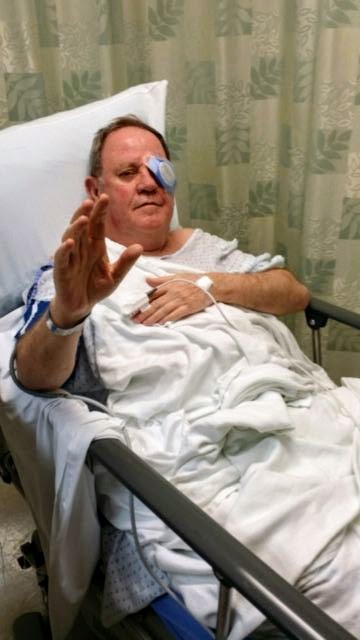
When my eye doctor, Dr. Susan Smith, suggested that I might need a "blind date," I immediately agreed and answered "yes" thinking I knew what she meant! Silly me! She meant I needed an appointment for cataract surgery on both eyes!


When I was introduced to "His Holiness," I was still having problems with my cataract surgery. I thought it was the Pope offering to make me a Cardinal. I foolishly said, yes," only to find out that I was about to be named the Fifteenth Dalai Lama. Archbishop Kelly made me decline the offer, reminding me that I was not a Buddhist. I should have known it was a mistake because the present one is more than a year younger than me -- at that time too young to retire as the Fourteenth Dalai Lama! 


This was my second grade nun, Sister Mary Ancilla, who said to me, after I had flunked her Latin altar boy test for the third time, "Ronnie, you are a good kid, but I don't think you'll ever be any good around the altar!" I waited till I was ordained and almost retired, and she was in a wheel chair, to give her a dozen "squirting" red roses as a revenge joke! They sprayed her good! With water everywhere, we both laughed. I told her, "Sister, you're a good nun, but I don't think you'll ever be any good around the baptismal font!" 
We are now even!