Tuesday, July 2, 2019

PAPPAW???? ARE YOU KIDDING ME?


DELUSIONAL? 

The other day, I was at a Dollar Store picking up some snacks for the kids down in the islands who will be coming to our second annual Computer Camp. There was a young couple pushing their "bascart" with two small boys in it. One of the little boys saw me, looked right at me, and started reaching for me and saying "Pappaw!" He would not stop. Every time I turned a corner and ran into them he started up again, "Pappaw! Pappaw!" 

Here is a recent photo of me looking at myself. Honestly, do you think I look like anyone's "Pappaw?"  I certainly don't see a "Pappaw" when I look in the mirror!!!!! 

No comments, please! 


Sunday, June 30, 2019

NO! MAYBE! YES! DEFINITELY!

COMMITMENTS


No one who sets his hand to the plow and looks to

what was left behind is fit for the kingdom of God.

Luke 9:62

Most of you know my story by now – how I got to the priesthood and many of my adventures since, but today’s readings make me want to tell you again, but hopefully in a new way.

I knew I wanted to be a priest when I was in the second grade and I have never wanted to be anything else since. I entered seminary at age fourteen, the earliest possible date, of my own free will. No one talked to me into it. In fact, most of the adults in my life, including my pastor, tried to talk me out of it or tried to make sure I didn’t make it. Of course, the reasons I started were not the same reasons I stayed. Who could know at age fourteen? For twelve rough seminary years, with God’s help, I overcame all the obstacles thrown on my path and kept my eye on the finish line – ordination to the priesthood, which came when I was twenty-six years old. 

Almost fifty years later, here I am still standing, still priesting and very happy doing it. My goal is to die at a ripe old age with my collar on, doing some kind of priestly ministry. 

I have never looked back, never regretted it and never seriously thought about anything else. There were a couple of days, back when the sexual abuse scandal broke, when I actually thought about it for the first time, but it soon passed. 

I am very aware that I did not do this of my own power and strength. I have felt God’s strength helping me all the way. Looking back, I can see clearly that even the setbacks, disappointments and failure have all been part of God’s plan for me. In fact, some of the greatest blessing in life have come to me as a result of remaining faithful to my call through thick and thin. At 75, I can say unabashedly that I am a happy man, a man who has been blessed in more ways than I ever thought imaginable. 

Today we have some wonderful readings about making commitments. In the gospel, three different people wish to make commitments to following Jesus and Jesus warns them about how easy commitments are to make and how hard they are to keep. Surely, we can all see ourselves in one or more of these people.

The first man is gushing with enthusiasm. He represents the people among us who rush into commitments without much serious thought. Think of that incredibly stupid and naïve TV program “90 Day Fiance!” The man in the gospel says to Jesus, “I will follow you wherever you go!” Jesus stops him in his tracks with a warning. “My friend, before you can follow me, you must count the cost before you get in and you must be willing to pay the price after you get in, because following me is not a cake-walk. It requires the ability to handle much suffering.” 

The second man wants to follow Jesus, but he wants to put it off for a while until the time is right, until things are taken care of, until, until, until…..” He represents the people among us who procrastinate, hoping for the right time, the ideal situation, the perfect circumstance. Jesus says to him, “Don’t bother! It’s either now or never! Either commit now or forget it!” 

The third man wants to follow Jesus, but as soon as he commits, he begins to second-guess himself. He represents the people among us who are always looking around for a better deal, looking back at the options they didn’t take, looking ahead at ways they can get around their commitments. 

These readings are so appropriate today when commitments are in a deep crisis. We live in a world of the “latest best offer.” Today, commitments are often made without thought and abandoned without guilt. Today, commitments are delayed longer and made later and later in life, with some people never getting around to making a commitment to anything permanent. Today, commitments are made more often than they are kept, because many commit with a roaming eye, especially when those commitments require anything painful. 

The greatest joy in life, I believe, is making a commitment and keeping it. To have this joy, you have to count the cost beforehand and you have to be willing to pay the price afterwards. No, keeping a commitment is not easy in the short run, but in the long, it is a source of great satisfaction.

Young people here today, there is a lesson here for you, especially because you are at the age when life commitments are traditionally made.

(1) Some of you will be tempted to rush into commitments that you do not yet have the inner resources to keep. Anyone can make a commitment, but it takes a very “together” person to carry though on it. Look before you leap, especially before marriage! That person in front of you might look good and make you feel good today, but the real test is whether you can live with them and love them when they no longer look good and you no longer feel good about them? Do you have enough insight into yourself and enough inner strength to love them “for better or for worse, for richer for poorer, in sickness and in health, until death do you part?” If you want to look for role models, forget the rich and famous of Hollywood! They are the worst role models for keeping commitments. Most of them have disaster after disaster in their personal lives. Their children are harmed in the process. Rather, look at somebody who knows what they are talking about, somebody who has a proven track record. Look at your grandparents, for instance, anybody who has loved another through thick and thin! That’s where you will find out how to do it!

(2) Many of you have so many options that you are paralyzed by those very options. Some of you will find it hard to get around to committing to anything - be it a major in college, a profession or a relationship – because you will hold out for the perfect option. Since there are no perfect options, you may find yourself going into your forties without ever having made a choice. Commit to something and give it all you’ve got! The word “decide” means to cut in two. When you decide, you choose something and you reject something. You cannot have your cake and eat it too! A choice is hard to make, yes, but it also brings a certain freedom from having to explore choice after choice, after choice. 

(3) Many of you may have already rushed into some simple commitments, failed to keep them and learned from your mistakes. Maybe it was a relationship that you got into too quickly, when things only looked good. Maybe you bought a new car on credit with money you did not have, only to see it repossessed and ruining your credit. Those kinds of simple mistakes can actually be great learning experiences. Hopefully, you have learned the lesson that Jesus is trying to teach all of us today: don’t rush into commitments before you know yourself and the one to whom you are committing. Count the cost first, and once a commitment is made, do not look back in regret or look around for a better offer. 

When you are merely interested in something, you do it when it’s convenient. When you are totally committed to something you do it no matter what! Only then can you experience the joy that comes from keeping a well-thought-out commitment. 


Friday, June 28, 2019

AT BISHOP JOHN STOWE'S INVITATION


KEEP YOUR EYES ON THE PRIZE
"Encouraging Words for Discouraged Catholics"


Lexington Bishop John Stowe, O.F.M. Conv. 
heard about the Parish Mission we presented twice here in Archdiocese of Louisville last Lent and has invited us to present it in his Diocese at the Cathedral of Christ the King in Lexington. 
We have accepted with enthusiasm. 


We completed one in Vine Grove KY and one in Louisville KY last Lent. 
The response at both was excellent. 

Pray for the success of this one in the Diocese of Lexington in October.  

Let your friends in, and near, Lexington know about it. If you missed the ones here in Louisville, carpool out to Lexington, join us and be encouraged! 


Wednesday, June 26, 2019

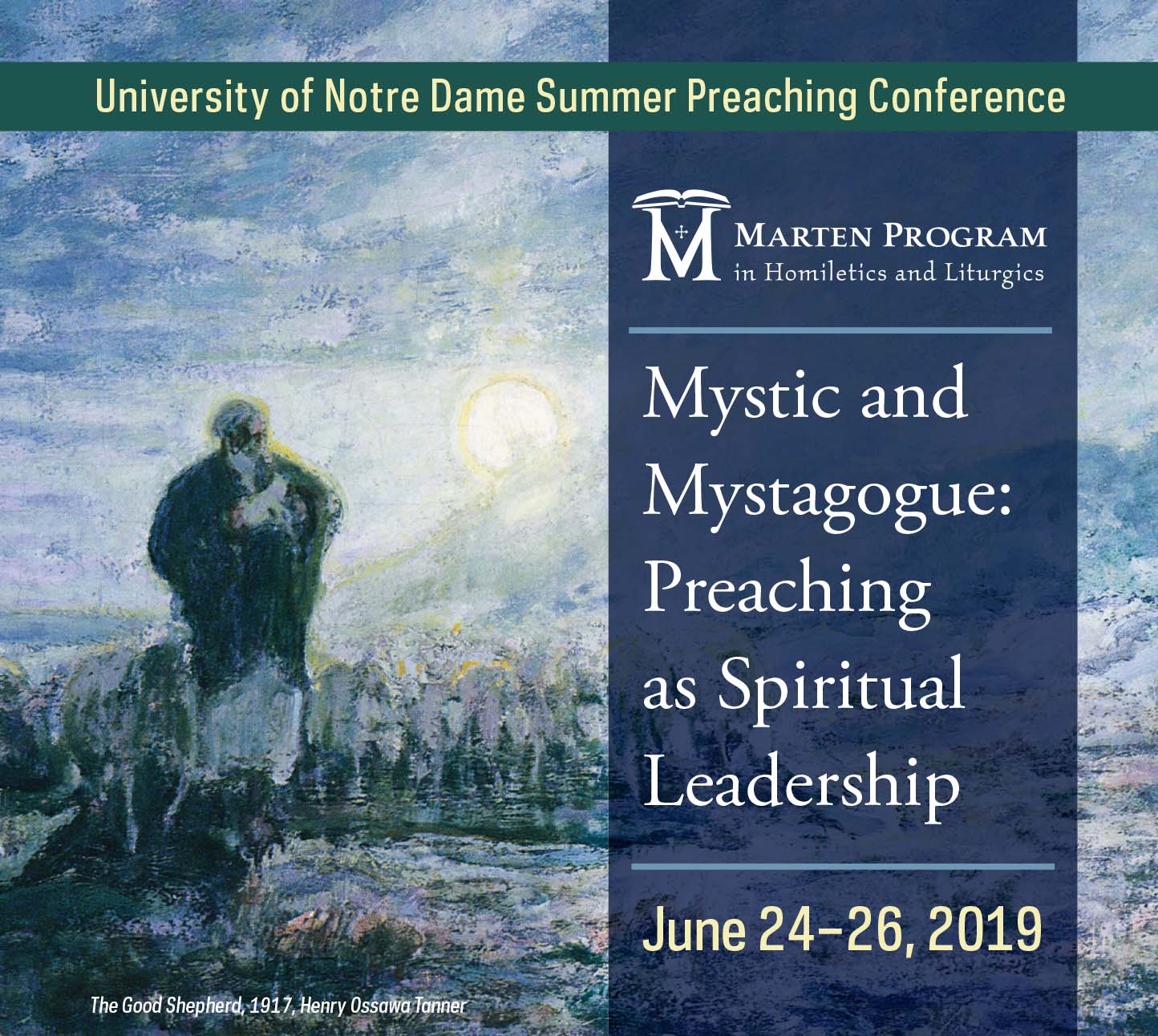
HONORED TO HAVE BEEN A PRESENTER AT NOTRE DAME

Tuesday, June 25, 2019

I HAVE LOST ANOTHER GOOD FRIEND

FORMER CATHEDRAL PARISHIONER
Jeffery Lynn Antle


                                                           1941 - 2019


Naples, Florida - Jeffrey Lynn Antle Sr., 77 years old of Naples, Florida and Louisville, Kentucky, passed away peacefully on June 11, 2019. He was born in Louisville on July 29, 1941. He was preceded in death by his parents Joe Basil Antle and Ethel Cundiff. 


He attended duPont Manual High School and Western Kentucky University. He retired from Olde Discount Corporation as a branch manager in 1999. 


Survivors include Cecilia Anzures, his wife of 25 years, children by a previous marriage, Jeffrey Antle Jr. (wife Leah) and Emily Elizabeth Possidento (husband Alec), grandchildren, MacKenzie Lynn, Trevor William, Braden Jeffrey, Elizabeth Charlotte Antle; Olivia Caroline and Vincent William Possidento. 

Visitation was on Friday, June 21, 2019 at Ratterman Funeral Home, 12900 Shelbyville Road, East Louisville, Kentucky from 3:00 - 9:00 PM. 

A funeral mass was held on Saturday, June 22, 2019 at 10:00 AM at the Cathedral of the Assumption, 433 S. 5th Street, Louisville, Kentucky followed by interment at Anzures Antle Mausoleum at Cave Hill Cemetery. 

In lieu of flowers, donations may be sent to the Cathedral of the Assumption or Cancer Research Society / Research.


Sunday, June 23, 2019

CORPUS CHRISTI


 FEAST OF THE BODY AND BLOOD OF CHRIST


This weekend we celebrate the Feast of the Body and Blood of Christ, a melding of two former feasts. Until a few years ago the church celebrated the “body” on one day (Feast of Corpus Christi) and the “blood” (Feast of the Precious Blood) on another.


Even though the church encourages us at every Mass to spend a brief period of silence after communion, this Feast encourages us to spend some longer devotional time before the Blessed Sacrament so we can reflect more deeply on this great mystery. The time spent reflecting on this great mystery reminds us that we become what we eat so that we can be the self-giving Christ for others.


The evolution of the Last Supper into the Mass we know today is quite interesting. 


Did you know that the first record of the Eucharist was not the story of the Last Supper in the various gospel accounts. That came later. The very first record was the one we read today in our second reading from the First Letter of Paul to the Corinthians written in about 54 AD. 

Brothers and sisters:
I received from the Lord what I also handed on to you, 
that the Lord Jesus, on the night he was handed over, 
took bread, and, after he had given thanks,
broke it and said, "This is my body that is for you.
Do this in remembrance of me."
In the same way also the cup, after supper, saying, 
"This cup is the new covenant in my blood.
Do this, as often as you drink it, in remembrance of me."
For as often as you eat this bread and drink the cup, 
you proclaim the death of the Lord until he comes.

I Corinthians 11:23-26

The first Last Supper account from the Gospel of Mark was probably 66-70 AD, about 12 to 16 years later than the account we read from First Corinthians. 

At the time of Paul, it was customary for Christians to hold an Agape meal (Love Feast) before the Eucharist. It was some sort of pot-luck dinner that the rich and the poor shared. However, in Corinth things had gotten a little out of control and the art of sharing was being lost. The rich would not share their food, but ate it in little exclusive groups by themselves, hurrying through it so they did not have to share, while the poor went with almost nothing. Some of them even got drunk at these meals. Did you know that Paul basically reams them out for this in this same letter we read from today?

Did you know that St. Clement of Alexandra had to write a letter to his people in the year 200 about the problem of lengthy mouth-to-mouth kissing during the sign of peace? 

Did you know that in the year 350, the Council of Nicea outlawed the practice of kneeling during Mass as “novel,” preferring the older custom of standing as the proper way of praying at the Eucharist?

Did you know that the Mass changed from Greek to Latin in 384 so that people could understand and participate. Even in the old Latin Mass, we had some hang-over Greek Words - Kyrie Eleison - which is Greek, not Latin! That wasn’t changed again till 1963, when we went to English "so that people could understand and participate."

Did you know that lay people had their parts of the Mass taken away around the year 1000 and they were not restored to them till Vatican Council II? Growing up, the priest and the altar boys, and maybe the choir, interacted while people said the rosary or read along with their missals in silence.  The Mass today is more like it was in the church’s early years than it was when most of our older members were growing up. 

Did you know that tabernacles in churches did not start till the 12th century and did not become standard until the 17th? Did you know that Protestants invented pews? Catholics had been using chairs, as we do here in our Cathedral, just as they do in St. Peter’s Basilica in Rome today and in most European Cathedrals? There weren’t even chairs in the early church. People stood, even during long homilies. They did provide a bench along the wall for the sick and elderly. 

Did you know that so few people were going to communion in the 13th century, because they considered it too sacred to receive, that the Pope had to make a law saying people must receive communion at least once a year? It came to be called our “Easter duty.” Did you know that veneration of the Blessed Sacrament at Benediction and the custom of Corpus Christi processions became a substitute for receiving communion during this period? 

The feast we celebrate today didn’t come till the 13th century. This is how it came about. 

In 1263 a German priest, Fr. Peter of Prague, made a pilgrimage to Rome. He stopped in Bolsena, Italy, to celebrate Mass at the Church of St. Christina. At the time he was having doubts about Jesus being truly present in the Blessed Sacrament. He was affected by the growing debate among certain theologians who, for the first time in the history of the Church, began introducing doubts about the Body and Blood of Christ being actually present in the consecrated bread and wine. In response to his doubt, according to tradition, when he recited the prayer of consecration as he celebrated the Holy Sacrifice of the Mass, blood started seeping from the consecrated host and onto the altar and corporal.

Fr. Peter reported this miracle to Pope Urban IV, who at the time was nearby in Orvieto. The pope sent delegates to investigate and ordered that host and blood-stained corporal be brought to Orvieto. The relics were then placed in the Cathedral of Orvieto, where they remain today.

This Eucharistic miracle confirmed the visions given to St. Juliana of Belgium just a few years before. St. Juliana was a nun and mystic who had a series of visions in which she said she was instructed by Our Lord to work to establish a liturgical feast for the Holy Eucharist, to which she had a great devotion.

After many years of trying, she finally convinced the bishop, the future Pope Urban IV, to create this special feast in honor of the Blessed Sacrament, where none had existed before. Soon after her death, Pope Urban instituted Corpus Christi for the Universal Church and celebrated it for the first time in Orvieto in 1264, a year after the Eucharistic miracle in Bolsena.

Inspired by the miracle, Pope Urban IV commissioned a Dominican friar, St. Thomas Aquinas, to compose a Mass and an Office for the Feast of Corpus Christi. Saint Thomas Aquinas' hymns in honor of the Holy Eucharist, Pange Lingua, Tantum Ergo, Panis Angelicus, and O Salutaris Hostia are the beloved hymns the Church sings on the Feast of Corpus Christi as well as throughout the year during Exposition, Benediction of the Blessed Sacrament and in Corpus Christi Processions when the Blessed Sacrament is carried through the streets. 

Some of you older folks, my age and older, might remember the Corpus Christi Processions of the past. The Holy Name Society of Holy Name Church, out Third Street near U of L, under the direction of Monsignor Timoney its pastor, sponsored the local Corpus Christi Procession. It was held originally where Bellarmine University is now, but he had it moved to Churchill Downs. An account from 1952, says that 50,000 Catholics from the area around Louisville attended on a Sunday afternoon. There were other processions out in the country in places like Flaherty. I can remember marching with my Dad, uncles, brothers and men from neighboring parishes in Flaherty. Of the 50,000 attendees here in Louisville, 15,000 men and boys marched around the track at Churchill Downs, while 35,000 women and girls sat in the grandstand and clubhouse. Devotional music was sung and the rosary was prayed. When all the men were on the track in position, the Blessed Sacrament was carried from altar to altar, until Benediction was celebrated with the newly ordained priests serving as assistants to the main celebrant, usually the bishop or archbishop. Those processions gradually died out in intensity after Vatican Council II and are only a memory except in a few places like Saint Martin of Tours here in Louisville.

The Eucharist has undergone many changes in its form, but its essence is still the same. Baptized believers have gathered around bread and wine, having become the body and blood of Christ, to be nourished, energized, transformed and strengthened for over 2,000 years. It’s a family reunion. It’s bread for the journey and strength for the trip. It’s an intimate meeting between a loving God and his adopted children. It’s at the heart of what being a Catholic is all about. That is why we are here today – to celebrate what has been handed on to us from the Lord Jesus himself!