Sunday, January 22, 2023

A VOCATION - WE ALL HAVE ONE


As Jesus was walking by the Sea of Galilee, he saw two brothers, Simon who is called Peter, and his brother Andrew, casting a net into the sea; they were fishermen. He said to them, “Come after me, and I will make you fishers of men.” At once they left their nets and followed him.

Matthew 4:12-23

Please excuse me if you have heard this story several times. I have only one life, so I have to repeat some of my old experiences once in a while. As some of you already know from my many years of preaching at the Cathedral, at Bellarmine and writing in The Record, that I got my “call” when I was about six years old. No, God did not speak to me from the clouds. Mary did not appear to me in church. Something, however, happened when I was six years old that I have never forgotten. Since I was born and grew up in Rhodelia where there were no barber shops, an elderly man up the road by the name of Alvey Manning cut my hair for $.25. One day, one of his nephews who had recently been ordained, Father Henry Vessels, came for a visit. I just happened to be there for a haircut. Father Vessels paid no attention to me and I don’t even remember talking to him that day. At some point, he had taken off his Roman collar and coat and laid them on one of the beds. I don’t know what possessed me, but I sneaked into the bedroom, held the collar up to my neck and looked at myself in the mirror. Not knowing what got into me, I dropped it like a hot potato, as if I had broken every religious taboo in the Catholic Church.  Even though I was only six years old, I have never forgotten that experience.

The next time the subject of priesthood came up was a year later. I was in the second grade when Sister Mary Ancilla asked us to tell the class what we wanted to be when we grew up. I can still remember thinking, “should I or shouldn’t I” tell them! I can still remember urging myself to go ahead and say “priest” whether they laughed at me or not! The only problem was, I proceeded to flunk the altar boy test, not once, not twice, but three times! This prompted Sister Mary Ancilla to say to me, “Ronnie! You’re a good kid, but I don’t think you will ever be any good around the altar!” (As punishment, I made her sit in the front pew at my First Mass.) 

Throughout grade school, unfazed by Sister Mary Ancilla’s negative evaluation of my possible calling, I did not dwell on the idea of being a priest, but it was always there in the back of my mind. When it came time to go to high school in 1958, I found out that the church would accept young men to start their seminary training out of the eighth grade. Against the advice of almost everybody who knew me, even my pastor Father Felix Johnson, I decided to apply. He didn't want to fill out the papers for my going to the seminary until I groveled. Even then, he predicted I wouldn't make it to Christmas.  A month or two later, at barely fourteen years of age, I left home to begin a twelve-year seminary program to become a priest. Father White called me into his office during my second year of high school seminary and told me he was sending me home because "you, Mr. Knott, are a hopeless case." I had to grovel again for a second chance. (Actually, when I think about it, I have had a lot of experience at groveling!)

Finally, on May 16, 1970 I was ordained! It was hard, very hard, an uphill battle most of the way, but I never looked back, I have never been through an identity crisis for more than a day or two, and even today, I would not trade with anybody. However, even on my ordination day, a woman came up to me and asked how many years I was in seminary. When I answered 12, she stepped back and gasped, "My God! You could have been something!" Most of the time, almost fifty-three years now, I have loved doing what priests do. At age 78, almost 79, with the finish line in sight, I still hope to finish my life as a priest.

In today’s gospel Jesus notices two sets of brothers, fishing. He calls them to follow him, to become his disciples.  We are told they immediately dropped their nets, two of them even dropped their father, and followed Jesus.  Unlike the resistant and foot-dragging response of the Prophet Jonah, these guys are decisive and passionate.       

Throughout Scripture, different people respond differently to God’s call. Abraham and Sarah were old, “one foot in the grave” as the scriptures put it, when they were called to be the father and mother of God’s “chosen people.” Sarah was even caught snickering in her tent about the very idea of becoming a mother in her old age. Moses, who had some sort of speech impediment, tried to beg off when God called him to lead his people out of slavery. Because of his youth, David wasn’t even called in from the fields for the selection process to be King of Israel, yet God chose him over all his older and wiser brothers. The Prophet Isaiah tried to beg off because he had a foul mouth, but God chose him to be a prophet anyway, after washing his mouth out with a hot coal. The Prophet Jeremiah also tried to beg off, using the excuse that he was too young and pathetic at public speaking. God chose him anyway. Mary was barely a teenager when God called her. Paul was a fanatic Christian basher, but God called him to make a 180 degree turn and convert thousands to the Christian way of life.  Sts. Francis of Assisi and Augustine of Hippo were playboys of the worst kind. The scholarly St. Thomas Aquinas, when he was younger, was nicknamed “the dumb ox.” He was so fat that they had to cut out part of the table so that he could reach his plate. He became one of the Church’s most brilliant theologians. Elizabeth Ann Seton was a married Episcopalian when God called her to convert to Catholicism, to become a nun on the death of her husband, to start schools, orphanages and hospitals all over the eastern coast of the United States and finally to become one of a handful of American saints. These men and women join a long list, not only of very ordinary people, but also a long list of misfits, adulterers, losers, weaklings, incompetents, thieves and idiots that God has called to important work.

You are also called to called to carry on some part of Christ’s ministry to the world. Yes, you! God has a special job for you to do in your life that no one else can do. You cannot use the excuse that you are too young or too old, too unworthy or too short on talent. One of the most regular themes in scripture is this: God does not use the world’s standards for choosing those he calls. No, he “chooses the weak and makes them strong in bearing witness to him.”

Personally, I have always thought that marriage and the raising of children was the hardest of vocation. I have always admired those of you who were called to marriage and who have raised families. I don't know how you do it! I learned that when it comes to marriage, you cannot judge a book by its cover. I have presided at weddings where I had great confidence that the new couple would surely make it, but didn't. I have presided at other weddings where I was very doubtful they would last a year only to help them celebrate their 50th wedding anniversaries!  Obviously, God knows more about what he was doing than I did! 

From personal experience. I learned a long time ago, both as a seminarian myself and as a seminary staff member for fourteen years, that the best seminarians do not always make the best priests! In my own case, very few people had much hope for me making it to priesthood, much less lasting this long! I am pretty much surprised myself, but as Mary said to the angel, “with God, anything is possible.” 

Maybe you are young and have not yet heard your life’s call. If not, just remember that God has his eye of you right now, so be ready to "drop everything" and "go for it!" Maybe you are right in the middle of living out your vocation or maybe you have completed your life's vocation. Either way, I hope you can look back over your vocation and feel how I feel about my own call. My vocation is summed up in four words at the top of my new tombstone down in Meade County - “simply amazed – forever grateful.”  


Thursday, January 19, 2023

LITTLE SISTERS OF THE POOR: ONE OF MY RETIREMENT MINISTRIES

In my retirement, I have taken on several new ministries. I help out every week at either (1) St. Leonard Church or (2) Saint Frances of Rome Church and sometimes at both on the same weekend. (3) I have been working on building a new Family Life Center in our old grade school at my home parish of St. Theresa in Rhodelia. (4) Every week, I have Mass once or twice a week at the local St. Joseph Home for the Aged operated by the Little Sisters of the Poor just down the street from my condo. 

            A special Mass with the local Little Sisters including a few visitors from other homes.
Here, they are wearing their "summer and work habits." 

A special day when priests were invited to wait on tables. 

A typical day at lunch with Little Sisters helping serve the meal for those able to come to the dining room. 

Mother Provincial Julie (center, front row) from Chicago wanted to go to my home parish of St. Theresa down in Meade County. 

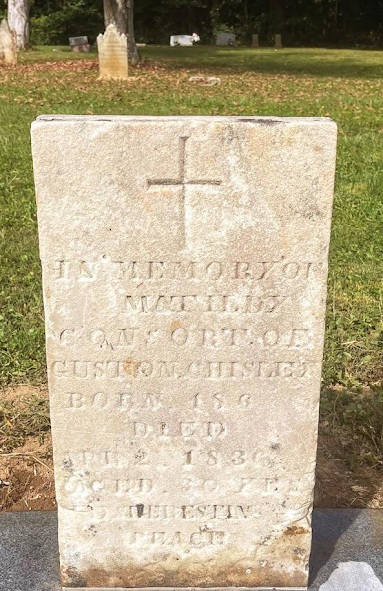
As an admirer of  the soon-to-be canonized  Father Augustus Tolton, first black priest to be ordained for the United States, Mother Provincial Julie wanted to visit his grandmother Matilda's grave in the old St. Theresa Cemetery. Father Tolton, his grandmother, Matilda Chisley and his mother Martha Jane (also from St. Theresa) were sadly and tragically all part of a large group of 19th century Catholic slaves. 
 

You can see we cleaned off and reset Matilda's stone. Compare this photo to the moss-covered one in the picture above which is leaning terribly. 

At all four places, I feel appreciated and loved. All four are all life-giving communities that I look forward to being with and hopefully offer a bit of assistance and service. 


Tuesday, January 17, 2023

MY REFLECTION ON THE BASICS OF SPIRITUAL LEADERSHIP

Rev. J. Ronald Knott

"With what rashness then, would the pastoral office be undertaken by the unfit, seeing that the government of souls is the art of arts. Although those who have no knowledge of the power of drugs shrink from presenting themselves as physicians of the flesh, people who are utterly ignorant of spiritual precepts are often not afraid of professing themselves to be physicians of the heart."
St. Gregory the Great, “On Pastoral Care”

“Beware of false prophets, who come to you in sheep’s clothing, but underneath are ravenous wolves.” Matthew (7:15) reflects a problem of St. Gregory's own time, bad leadership even in the early church. Even today, not all who seek spiritual leadership in the church do so for the best reasons. Some are motivated by money and some are motivated by a need for the approval and the respect of others. Failing to understand or acknowledge the scars of their own past, some end up being more motivated by anger than by love, and still others seek positions of spiritual authority as a means of personal edification rather than an avenue to serve God.

“The quality and strength of one’s motivation are vital to any lifelong vocation. The temptation to seek priesthood motivated by power, privilege, status and security or to create a feeling of identity can be strong. Other effective motives would be to seek such forms of self-enhancement as comfort, exhibition or unearned affirmation. Likewise are the desire to do social work, to make a reparation for an alcoholic father, to satisfy maternal expectations, or to cover up a confused psychosexual life.  None of these deficit motivational patterns will sustain one for a long time.” (Rev. Desmond O’Donnell, OMI, “The Anatomy of a Vocation,” Seminary Journal,  NCEA, Winter 2003)

Emotionally needy people are especially drawn to the status and practice of ordained ministry. Since it takes humility and vulnerability to do so, some never examine what lies behind their desire to be a leader and are driven by unnamed demons. For this reason, the Church should take great care to screen out needy people who don’t understand who they are or who have no insight into their own motivations. If not, their neediness can derail even the best parishes in a very short time. This neediness can manifest itself in an insatiable need to be the focus of attention and affirmation, an authoritarian leadership style, hasty liturgical changes based on their personal preferences, an inability to listen and a disrespect for what has been done before their arrival.   Most, thank God, are driven by a genuine desire to do God’s work. 

The church today craves and needs good leaders, but at a time when society at large is displaying a growing interest in spiritual issues, there is an acute shortage of real spiritual leaders. The problem is not with people willing to present themselves as leaders, in fact “At the heart of America is a vacuum into which self-appointed saviors have rushed.” (Warren Bennis, ft 2 in Blackaby) People are so desperate for leaders that they are susceptible to following destructive and delusional gurus, would-be messiahs, almost anyone who promises miracles, signs and wonders and those who claim to know the truth, the whole truth and nothing but the truth. Most, however, simply endure and wait-out run-of-the-mill incompetents, many of whom are arrogant as well as ignorant. 

The first caution for beginners in “spiritual leadership” may be: “a designated leader, may or may not be, “a real leader.” People seem to know intuitively that claiming to be a leader or holding a leadership position does not make someone a leader. Even seminaries are bewildered that so few real leaders are emerging from their graduating classes. Designated leaders are not necessarily real leaders. God’s call and ordination makes one a designated leader, but whether one becomes a real leader is additionally a matter of intention, skill and practice. Good will is not a substitute for competency. A true leader has the ability to unleash the power of individuals and direct it toward the goals of the community. The Good News, and its communication through word and deed, is what spiritual leadership is all about. Indeed, an ordination, a collar and a title do not necessarily make one an effective spiritual leader.  Indeed, the best scenario is when a designated leader is also a real leader.

One of the most painful lessons I had to learn as a new pastor was having the title of a leader did not necessarily mean that I was, in fact, a leader. I had accepted the title of pastor, but I was ambivalent and unprepared for all that a pastor of an important and visible church like a cathedral needs to be. As a result of my indecision and lack of focus, the associate pastor “took charge” and left me in the dust. Our constant clashes came to a head one day when one of the musicians screamed out at a tense meeting, “The trouble around here is that we have two “pastors!” It hit me like a ton of bricks: I had the title and the associate had the power. Instead of being angry at him, I decided to step up to the plate and commit myself to becoming a pastor not just in name, but also in fact.

The second caution for beginners in “spiritual leadership” may be:  “know thyself.” Father William Moorman, coordinator of spiritual formation at St. Luke Institute, a treatment center for priests says this about some of our leaders-to-be, as spiritual leaders “we are entrusted with the unique responsibility of embracing the sacred intimacy of another’s spiritual life. Can this be possible if we are unable to embrace the mystery and the sanctity of our own identity? Too often candidates are looking for the identity of priests/religious as a vicarious personal identity, which is always a formula for disaster. Most often these individuals insist on external order to balance their internal chaos, and they never achieve the inner peace they long for in their spiritual lives. Spirituality for such persons reside outside themselves in spiritual practices, as opposed to embracing the mystery of God, others, and self.” Any formation program for “spiritual leaders” must assume reasonably integrated individuals, but Father Moorman notes that because of the shortage of seminarians, screening and formation programs are accepting and tolerating candidates with demonstrable personality traits such as dependency, avoidance, narcissism, and obsessive/compulsive behavior. (Pp.36-37 HUMAN DEVELOPMENT, vol, 27, no. 2 summer 2006) Priesthood, even today, offers seductions of power, prestige and flattery. This attracts those who are drawn to the status and practice of ministry along with their need to be the focus of attention and affirmation. This focus becomes even more pernicious if it is couched in the religious language about being servants.

Saint Gregory the Great, in his remarkably applicable work “Pastoral Care,” warns of those who “investigate spiritual precepts with shrewd diligence…but teach what they have learned, not by practice, but by study, and belie in their conduct what they teach by words.” As if writing about recent events in our church, he observes, “For no one does more harm in the Church than he who, having the title or rank of holiness, acts evilly.” 

He goes on to warn those who enter into ministry with a divided heart, “The mind cannot possibly concentrate on the pursuit of any one matter when it is divided among many. It is as though it were so preoccupied during the journey as to forget what its destination was; with the result that it is so great a stranger to the business of self-examination as not to be aware of the harm it suffers, or to be conscious of the great faults it commits.”

Saint Gregory the Great, again with remarkable application to today’s reactionary young priests, warns of those “who…busy themselves with a variety of inquisitions, more than is needful, and fall into error by their excessive subtlety.” Fools rush in where angels fear to tread. Rather, he says, “When the ruler prepares to speak, he must bear in mind to exercise a studious caution in his speech, for if his discourse, hastily given, be ill-ordered, the hearts of his hearers may be stricken with the wound of error, and when perhaps, he wishes to appear wise, he will by his lack of wisdom sever the bond of unity.”  Many unseasoned new pastors have done great damage to the church in their zeal for, but limited understanding of, “orthodoxy and truth.”

The third caution for beginners in “spiritual leadership” may be: “Nemo dat quod non habet.” “No one gives what he does not have.” Saint Gregory Nazianzus put it another way. “Before purifying others, they must purify themselves; before instructing others, they must be instructed; they have to become light in order to illuminate and become close to God in order to sanctify.”  Indeed, as Father Howard P. Bleichner wrote, “Lofty prose is easily mouthed.”  It is easy to recite high ideals, but very difficult to live them.

 A fourth caution for beginners in “spiritual leadership” may be: “Integrity is essential to leadership.” Gregory the Great says, “For one who is so regarded that the people are called his flock, must carefully consider how necessary it is for him to maintain a life of rectitude. It is necessary, therefore, that he should be pure in thought, exemplary in conduct, discreet in keeping silence, profitable in speech, in sympathy a near neighbor to everyone, in contemplation exalted above all others, a humble companion to those who lead good lives, erect in his zeal for righteousness against the vices of sinners. He must not be remiss in his care for the inner life by preoccupation with the external; not must he in his solicitude for what is internal, fail to give attention to the external.” He goes on to say, “For one who by the exigency of his position must propose the highest ideals, is bound by that same exigency to give a demonstration of those ideals. His voice penetrates the hearts of his hearers the more readily, if his way of life commends what he says.”

A fifth caution for beginners in “spiritual leadership” may be: It’s not about you!” It has always been true for newly ordained priests, but one of the many downsides of a priest shortage is that the traditional “headiness” that comes with ordination is being exacerbated. Newly ordained priests and priests-to-be are so often “made over” and “focused on" during their days in the seminary and especially during their ordinations and “first Masses” that they begin to feel special, maybe too special. This powerful surge of special treatment can, unmonitored, lead quickly to the cocksure arrogance of clericalism and entitlement.  As Pope John Paul II put it, priests are not above the laity or alongside the laity, but for the laity. It’s not about us, but them!

The best advice to those who want to prepare themselves for “spiritual leadership” is to insist that they do serious inner work to see if they have the “right stuff” to practice the art of arts, to be physicians of the heart. Otherwise, they ought to be arrested for false advertising or dismissed as a menace to the People of God, even if they do mean well.    


Monday, January 16, 2023

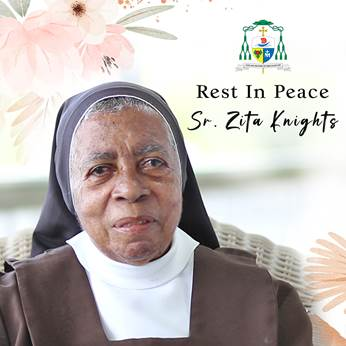
THE PASSING OF A SELFLESS WOMAN OF FAITH


My friend, Carmelite Sister Zita Knights, has died. Her funeral Mass will take place today, Monday January 16th, at 10:00 a.m. at the Abbey Church on Mount St. Benedict, in the country of Trinidad. Burial will take place on Mount St. Benedict.

Sister Zita ran the Bread of Life Orphanage that  merged with St. Benedict's Home for Children when she was forced to retire because of age and health issues. She spent years working with orphaned and abandoned children in St. Vincent and the Grenadines. I helped her with some of her needs, especially with lunch money for her school kids, food supplies for the orphanage, toys at Christmas and general school supplies. I visited with her three or four times. She gave her whole life in service to the many very poor children she mentored.   
The first time I met her, we took this picture with the boys of her orphanage. The girls were tied up with something else at that time.
Here she is with some of the Christmas toys we sent down to her children. She had them dressed in their finest for this photo. 
Here she is greeting me as she was arriving with the kids for Mass at St. Benedict Church in Georgetown where they attended Sunday Masses. 
Here she is, standing next to Bishop County, on that Fall day in 2018 when we presented her with a new van for her orphanage. Along with her were  some of the kids and orphanage staff. 
We celebrated the arrival and presentation of her new van with a Kentucky Fried Chicken lunch on the porch of the Diocesan Pastoral Centre. 
Here she is with Bishop Gerard County waiting for the plane that would take her into retirement at her Carmelite Motherhouse in Trinidad. She was very sad that day to go off and leave her kids and her home in SVG.  As sad as she was that day, I hope she knew in her heart of hearts all the good she had done while serving in SVG. 

Watch the Caribbean Carmelite Funeral of Sister Zita here. 


MY PRAYER FOR HER - A SONG OF FAREWELL


Sunday, January 15, 2023

CALLED TO BE A CONDUIT


A man is coming after me who ranks ahead of me.
The reason why I came baptizing with water
was that he might be made known to Israel.
John 1:29-34       

Some people just don’t know when to quit....and I’m not talking about Elvis’ last concert!  I’m talking about that part of all of us that doesn’t know when to call it quits, even when it’s time. Knowing when to quit after you have done your job is called the "Cincinnatus Factor." It is named after a famous and very successful Roman General who quit at the top of his game to return to obscurity. 

I went through that during my last years at the Cathedral. My ten year term came and went and I was still there. I had worked hard, I was proud of all that we accomplished together during those years and I was not eager to let it go so easily. Because it was such an exceptional assignment, the Archbishop left it up to me when to blow the whistle. A big part of me wanted to hold on, but after 14 years I knew it was time to move on so I asked him if I could resign.  I did not want to be one of those people who doesn't know when to quit and who attempts to stay so long that things begin to unravel and people start wanting to run them off!  Even though my heart wanted to hang on, I knew in my gut that it was time to let go. That was a John the Baptist moment for me!

Parents go through this all the time. After doing a great job of raising their children, after sacrificing to send them to college, there comes a day when it is time for those children to leave and start a life of their own. Instead of letting go, instead of not knowing when to quit, some parents meddle in their children’s lives even after they leave home and start a life of their own.  If they cannot keep from controlling their children’s decisions, they begin down a path of emotional terrorism. It’s like the New Yorker cartoon a few years ago. A woman is sitting on the couch, a child is playing on the floor and the man is talking on the phone. The caption below the picture read: “They say we can go there for Thanksgiving or they can cut us out of the will. Our choice.” Instead of focusing on living their own lives, those children end up focusing on their parents - always reacting to, or avoiding, them. Soon resentment becomes the norm. Those parents probably did a great job, but they didn’t know when to quit. When they didn’t know when to quit, they actually began undoing their own good work. Letting go of their children is, for them, a John the Baptist moment!

Some people, however, do know when to quit....and I’m not talking about Evel Kenieval’s retirement. I’m talking about that strange bird, that wild, bug-eating preacher, named John the Baptist. He knew his role. He did it passionately and moved out of the way when the time came. As popular as he was, he understood his role, he knew the fine art of being number two. He pointed to the light and left the stage.

Today, we are asked by the church to share John the Baptist's role as a “messenger.” Messengers carry other people's messages. Paul used the word "ambassador." Paul called us “ambassadors of Christ.” Ambassadors do not speak on their own, they represent someone in authority. Paul also called us “earthenware jars that hold a great treasure.” We are the fragile containers. We are not the treasure. We are, in the words of today’s gospel, “witnesses to the light, not the light itself." How many times have we, as a church, forgotten that distinction!

Every arrogant clergy person, every fired-up religious fanatic needs to have this message tattooed to the inside of his or her eyelids. There is a temptation and a trap that always seems to come with being a highly visible, highly successful, religious leader. The bigger the success, the bigger the temptation and the bigger the trap. Just look at all the fallen Jim Bakers of the last several years. They all had one thing in common: they started out pointing to God, but ended up acting like little gods themselves. Instead of pointing to the light, they ended up thinking they were the light.

I do know of one notable exception - our very own Bishop Charles Maloney. He was auxiliary bishop to three Archbishops here in Louisville. He was always an example of how to reflect the light onto someone else. Through thick and thin, he was always a humble, prayerful, honest, and faithful man, in spite of the powerful position he had held in the Church. He never let the trappings of his position become a trap for him personally. He, like John, lived a simple life, did his work well and got out of the way when the time came!

John the Baptist is an example to all of us! He understood his vocation, his mission. He did not draw attention to himself, but reflected attention onto Jesus.  He was a person who was sent to prepare the way for another - for Jesus.

John the Baptist is a model for all of us. (1) It was made clear to me from the beginning that, as a priest, I am sent “to serve, not to be served.” Priesthood is not my personal possession, it’s not about me, it is about being of service to you, the baptized members of the church. Pope John Paul II put it this way. “The priesthood is “for” the laity, not "above" the laity and precisely for this reason, it is a ministry “of service.”

(2) Most of you are called to married life.  Marriage, like priesthood, is directed toward the salvation of others. In spite of the fact that our culture teaches people that they marry for what it can do for them personally, marriage is for the benefit of their partners, their children and their communities. People who marry mainly to “be loved,” miss the main point of marriage. The main point of marriage is not turned inward, but outward. It is not so much about “being loved,” as it is about being a “love giver.” It is in giving that they receive. Like John the Baptist, a married person does not seek to draw attention to himself, but projects his attention onto his spouse and children.

(3) Parents, teachers, doctors and social workers are called to service as well. The role of parents is to mentor children into adulthood. The role of a teacher is to empower others for effective living. The role of a doctor is to offer others healing guidance. Social workers are called to help others get their lives back together in times of crisis.  Like John the Baptist, the whole purpose of parents, teachers, doctors and social workers is not to be served, but to serve.

(4) Those of you involved here in the various liturgical ministries of the parish need to remember the role of John the Baptist, be you priest, musicians, readers, hospitality ministers, altar servers or Eucharistic ministers. You do not perform your ministries to be admired or to impress people. The attention must always go to the assembly. Years ago, I had to deal with a lector, who dressed so outrageously flamboyant so as to get attention, that people complained that they could not follow the readings. After a very carefully worded talk, she understood. At the end of the day, the only question worth consideration is this. "Have we helped the members of the congregation pray, move closer to God, understand the Scriptures and have new insights into themselves? We are not here to show off or impress people with what we can do. We are catalysts. We are conduits. We are here for others. It’s not about us! It’s about those we are called to serve!

My friends, in a world where being number one, being on top, being first, being the winner, being the survivor, John the Baptist has a different message, a challenging message, a counter cultural message. Yes, there are times when we are called to “be all we can be,” but there are also times when we are called to empower others to “be all that they can be.” John the Baptist reminds us of the world’s best kept secret - the more we put ourselves in the center, the more unhappy we become. As I used to tell the Bellarmine students, "Beware of those who tell you that happiness consists of grabbing enough power to insulate yourself from having to deal with ordinary people."  It is a popular thought these days, but it's a trap. The great Albert Schweitzer nailed the truth when he said, “I don’t know what your destiny will be, but one thing I do know: the only ones among you who will be really happy are those who have sought and found how to serve.”