Not Being Embarrassed By A Former Parishioner Who Asks, "Remember Me?"


They have taken the Lord from the tomb and
we don’t know where they put him.
John 20:9
Obviously, none of Jesus’ friends expected him to rise from the
dead. In fact, they all assumed the grave had been robbed and the body had been
snatched. Once the news gets out that the body was missing, everybody in
today’s gospel runs around like chickens with their heads cut off! The word
“ran” is used three times in this one story.
Mary Magdalen got there first, not because she expected Jesus to
rise and wanted to be there when it happened, but because she wanted to do what
was traditional to do after the funeral of a loved one. It was customary to
visit the tomb of loved ones for three days after the body had been laid to
rest. It was believed that for three days the spirit of the dead person hovered
around the tomb, but then it departed because the body had become unrecognizable
through decay in that hot climate.
Jesus had died on Friday. By religious law, Mary Magdalen would
not have been allowed to travel on Saturday, the Sabbath. That meant she had to
wait till Sunday morning before she could make her first visit. She couldn’t
wait till the sun came up, she got there before dawn. When she got there, she
was shocked to find the stone rolled back and the body gone! She concluded that
the grave had been robbed. She ran back to town and got Peter
and John out of bed. All three ran back to the tomb.
John, being younger, outran Peter and got there first, with Peter soon
following. Before Mary Magdalen could catch up with them, they ran
past her on their way back to town to tell the others.
One by one, they began to believe that Jesus had indeed been
raised from the dead, beginning with John and ending with Thomas. From their
mouths to others’ ears, from their mouths to others’ ears, from their mouths to
others’ ears, this story has been passed down to us some 2,000 years later.
This is the Easter story, but what does it mean and what does it
have to do with us?
The point of Easter is not simply that life is sometimes troubling
and difficult but that, by its very design, it needs to be troubling and
difficult. This is because it is not ease but affliction that enables us to
develop our very best. Those who grow the most are simply the ones who have
weathered the most, endured the most, and struggled the most. Because such
trials have been borne in the right spirit, they have been strengthened,
enriched, and deepened the most by it. Think about any of the heroes and
heroines of the faith, and one will always identify persons for whom hardship,
sacrifice, and pain are no strangers. All breakthroughs are proceeded
by breakdowns. No pain, no gain.
In short, we must not view death and resurrection as just an
historical event from the past, but as a life-giving way of living today. We
are not here today to celebrate death and resurrection as an event that just
happened in history, but death and resurrection as a way of living our life
today.
People in recovery programs understand death and resurrection as a
way of life. People who have unilaterally forgiven their enemies understand
death and resurrection. Parents who have had to let go of their children and
see them thrive, understand death and resurrection. Anybody who has lost a job,
only to find a better one understands death and resurrection. Anyone who
has lost a spouse, only to find another chance at love, understands death and
resurrection.
This Easter is special to me personally. Several times in the last
52 years of priesthood, I have gone from one of the worst years of priesthood
to one of the best. The year I retired, seven years ago at this time, I was in
the pits. I knew I was in the pits, but I also knew in my guts that, if I would
just hang in there, things would get better – and they did, in spades! It has
happened at least three times just since I retired. For me, my breakdowns have always
been the beginning of yet another breakthrough! I am not that special! Whatever
breakdown you are going through, with an Easter faith, can be a breakthrough
for you as well! You can bet on it!
I always remember that engineer in Switzerland who designed a
great tunnel between Switzerland and Austria. He proposed they dig from both
ends and meet in the middle, a risky method. When the day came when diggers
were supposed to meet, but didn’t, he killed himself thinking that he had made
a great mistake. On the very day of his funeral, the workers broke through and
the connection was perfect! He gave up one day too early. An “Easter faith”
means that you don’t give up, no matter how hopeless things seem to be at
the moment.
In a nutshell, we are here to celebrate a way-of-living, not just an historical event! By embracing difficulty, we can overcome it. After a lifetime of embracing difficulties and overcoming them, we can even embrace our own deaths knowing that there is eternal life even on the other side of that! Just as Jesus was raised, we who believe in him will also be raised - to live with him forever!

Many Catholics do not know that total immersion baptism is an option when adults are baptized. Its their choice. When it became a choice, we made provisions for in in the Cathedral renovation in the1990s.
Many people also do not know that already baptized people are not re-baptized when they come into the Catholic Church as members from other Christian denominations. It is actually forbidden. We accept their baptisms as valid.

Imagine what it was like being baptized as a "slave" in a Catholic log cabin church in rural Kentucky in 1830! Today, it sounds incongruous and sad to use the words "Catholic" and "slave" in the same sentence. As awful as the common practice of slavery was back then, many Catholic slave "owners" of St. Theresa Parish were compassionate and caring enough to baptize their "servants," give them a Catholic education, attend Mass with them, provide them a Catholic burial and, in this case, are now part of producing a new American saint. Knowing these historical facts can help us realize how far we have come as well as how far we need to go.

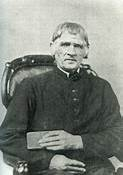
Charles was the uncle of Venerable Father Augustus Tolton, first black priest ordained in the United States and a soon-to-be-canonized saint. He left St. Theresa with his sister, Martha Jane who was the mother of Venerable Father Augustus Tolton, when their "owner" Ann Savilla Manning Elliott moved to Missouri.
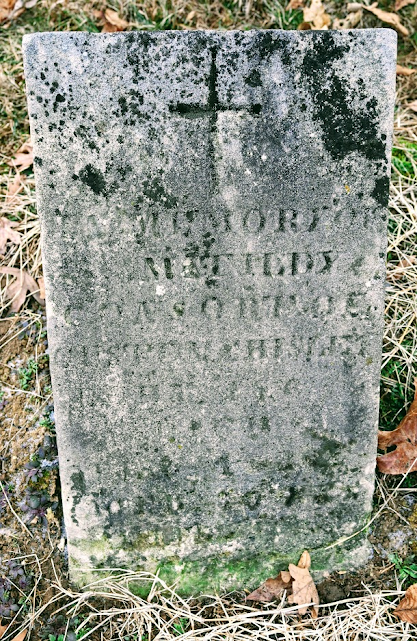
Below is Charles' mother's tombstone in St. Theresa Cemetery in Rhodelia, my home parish.